

Wait a Minute, Can Anyone Explain This?
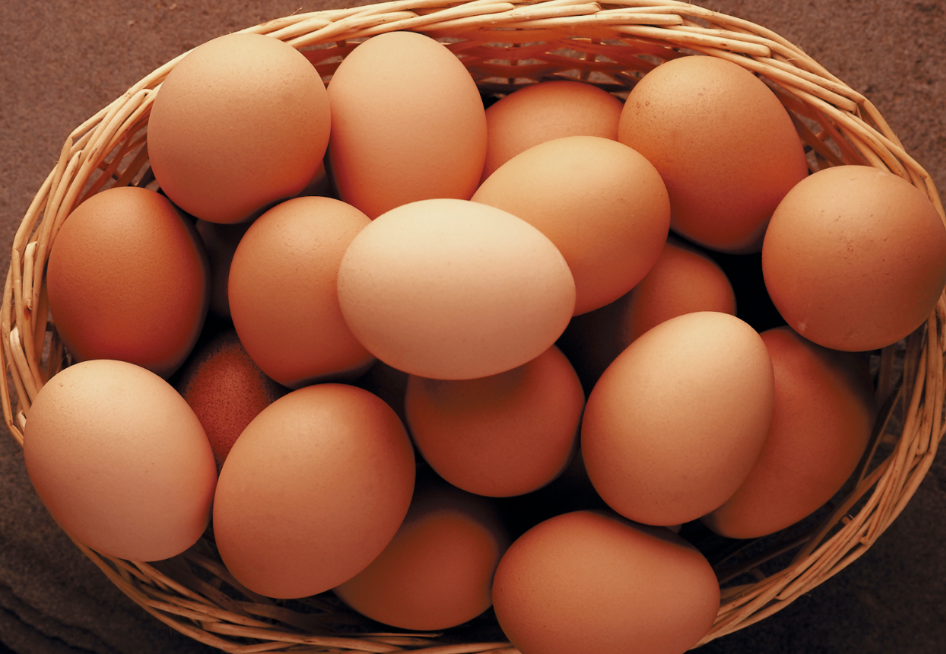

By Jim Bauer
@porwest (111560)
United States

February 25, 2025 7:44am CST
So, of course, we all know the reason that egg prices have mostly skyrocketed in price recently. It's the bird flu, right, that caused millions of egg laying hens to have to be euthanized.
That means, of course, we have a massively shortened supply of eggs that can be sold, and of course, THAT means that the prices have gone up.
But wait a minute. Hens are what we eat when we buy chicken. Has anyone noticed any shortages of chicken meat at the grocery store? Has Tyson said, "Our profits are hurting because we just don't have enough chickens to make our breaded tenders?" How's KFC doing? Church's? Popeyes? Who's had trouble getting a chicken sandwich at McDonald's, Hardees or Burger King?
Why did we only have to kill the birds laying eggs but not the ones we eat? And why hasn't the price of chicken followed the price of eggs? Why are Denny's and Waffle House adding 50 cent premiums to omelets but not to a chicken club sandwich?
We have an egg problem, but not a chicken problem. How is that possible?
Let me get this straight. We have a shortage of eggs because we have a shortage of chickens to produce them, yet we have no shortage of chickens to eat?
Something seems rather amiss here. Can anyone explain this?
10 people like this
11 responses

@DaddyEvil (163775)
• United States
25 Feb
Egg laying chickens and chickens we eat are kept far separated (on different farms completely) so just because the egg laying chickens caught bird flu doesn't mean the chickens we ear have caught it.
There is also the difference between the ages of the birds. Chickens we eat are usually only three months old whereas chickens that lay eggs are considerably older (around 18 to 25 weeks old) so it takes a LOT longer to replace them than it does to replace the chickens that we eat
11 people like this
@porwest (111560)
• United States
25 Feb
Still. No carryover at all? Nah, that doesn't make sense. When we had mad cow it didn't just affect cows we eat. It affected dairy cows too. I mean, I am not saying something IS going on here, but I AM saying something really stinks and we need someone to give us a detailed answer on this...from the government.
2 people like this
@DaddyEvil (163775)
• United States
25 Feb
@porwest You asked for "somebody" to explain it. I explained EXACTLY what's happening but that's not good enough? NOW, it has to be somebody in the government explaining it to you?
Okay, I'll tell you the truth, then... Biden is still running the country, no matter what the glorious dictator tells you. Biden is personally going around infecting ONLY the chickens that lay eggs with bird flu virus... Is that better? Do you honestly think someone in government versus someone who has lived on a farm that produces chickens we eat can explain it any better?
5 people like this


@porwest (111560)
• United States
25 Feb
@NJChicaa But that's the thing. We have not heard of ONE SINGLE CASE of a chicken to be sold to be eaten having gotten bird flu. We have heard NOT A SINGLE concern for the potential for bird flu spreading to eating chickens.
So long as the chicken will be eaten, apparently it is immune. Makes no sense.
@DaddyEvil says we keep the laying hens FAR from where the chickens we eat are. Then how are COWS being affected? How close are THEY to the laying hens? I mean, I'm trying very hard to put this all together in my head, and I just can't.
1 person likes this
@porwest (111560)
• United States
25 Feb
That sounds like a cockamamie BS story to me. There are MANY dual farms. None of them have been impacted? There's ZERO carryover to chickens we eat? Either we have a bird flu situation here or we don't. You can't tell me ONLY egg layers are affected here.

@1creekgirl (44257)
• United States
25 Feb
Dale just explained that fryers (that we eat) and layers (that lay eggs) are often housed separately. Not all the layers got bird flu and some fryers could have gotten it. But apparently there was more disease found in the layers which resulted in destroying chickens and the shortage of eggs, but there were still more fryers that are being sold in grocery stores and restaurants.
This is pretty much what DE @DaddyEvil was saying. So, sorry, but no conspiracies.
2 people like this
@porwest (111560)
• United States
26 Feb
I am still not buying this. I am not even suggesting it's a conspiracy. I am just saying it makes no sense and is weird.
Cows are separated from laying hens too. How are the cows getting it? lol Either the eating chickens are VERY lucky, or this is a BS explanation. It can't be both.

@paigea (36141)
• Canada
29 Mar
@porwest weird. I hadn't heard that.
It affected laying hens, it affected dolphins, that still doesn't lead me to the conclusion that it must affect meat chickens. (Which is how I interpreted your message, perhaps I'm mistaken)
It does make me appreciate how hard people worked to contain the bird flu outbreak.
1 person likes this

@lovebuglena (48417)
• Staten Island, New York
25 Feb
Perhaps the egg-laying chickens are kept separately from the chickens we eventually eat. But still, something doesn't seem right here.
1 person likes this
@lovebuglena (48417)
• Staten Island, New York
25 Feb
@porwest I’m no expert but I agree with you.
1 person likes this
@lovebuglena (48417)
• Staten Island, New York
26 Feb
@porwest yeah. There’s no way they mingle with each other.
1 person likes this

@dgobucks226 (37077)
•
1 Mar
It is an interesting question. I do know the historic price of inflation during the Biden years affected the prices of all products including eggs. And although the rate of inflation improved as Biden finally allowed refineries to release the oil and gas reserves to lower transportation costs, inflationary prices do not immediately cease, it takes time.
On the egg question, it's a supply and demand issue, isn't it? Less egg producing chickens equals less egg supply creating a shortage. Less product sold by farmers/businesses leads to less profit for them meaning the price remains high, so they make a profit. This gets passed down to the customers.
On the chicken question I'm not sure but perhaps there is some truth to the responses given here about egg laying chickens and which are used for what. Also, perhaps maintenance costs like feed factor into the pricing.
I do know bird flu cannot be passed from eating cooked chicken. It would kill the virus.
Anyway, I think the answer may lie in how these factors impact chicken producers and egg producers differently.
But definitely an interesting assumption...
2 people like this

@porwest (111560)
• United States
2 Mar
Oh, for sure. The biggest part of the egg prices we are seeing now is mostly caused by inflation. For example, I could buy eggs for under $1 a dozen before inflation started kicking in. By the time bird flu became a factor that affected he supply chain we were already seeing $3-$5 a dozen, then it backed off a bit and took hold on a second round and now we're seeing prices in the $7-$10 range.
Yeah, I've heard multiple explanations about the situations being different, such as bird flu being more prone to older chickens and less impacting on "broilers" which are killed at 3 months old for meat. I've heard about broilers being separated from laying hens and other explanations.
I am forever a cynic, so maybe there's something to these explanations or maybe we're being sold a bill of goods, or it's a half truth.
Either way, the situation is what the situation is, and regardless of the question or the answer, all we can do is deal with it.
1 person likes this
@porwest (111560)
• United States
6 Mar
@dgobucks226 I'm keeping an eye on that Cadbury bunny this year with some VERY high expectations. lol
1 person likes this

@kareng (79879)
• United States
1 Mar
Because chickens are designed and raised as egg layers or "meat" birds. Lots of different species and for those companies raising them that is the only kind they have. Meat birds are usually butchered at 3 months old. Egg layers can lay up to 10 years or more if fed a good diet.
1 person likes this
@porwest (111560)
• United States
2 Mar
I have heard this explanation as well, and that younger "broilers" are less susceptible to bird flu because it tends to affect older birds. Still, I am convinced there's some malarkey going on here, but of course I am no expert. Just a cynical guy on the Internet with opinions. lol
1 person likes this

@BarBaraPrz (50944)
• St. Catharines, Ontario
25 Feb
I can't explain it, but I've heard whole chickens are selling for $1.99 a pound here, not sure what eggs cost. Last time I was at the grocery store I asked the woman behind me (who happened to be buying eggs) what they cost. She said $6.99 a dozen.
1 person likes this
@porwest (111560)
• United States
25 Feb
It doesn't make sense. I mean, I look back to mad cow. It affected COWS. Didn't matter if they were milk cows or cows we eat. It affected them all. So, how come the chickens have found a way to immunize themselves but ONLY if they will be eaten? lol
1 person likes this
@1creekgirl (44257)
• United States
25 Feb
I can't explain it, but I bet my raised in the country husband can. I'll post later.
1 person likes this
@porwest (111560)
• United States
26 Feb
I appreciate both Dale's and @DaddyEvil's explanations. I'm still not buying it. No disrespect. lol
2 people like this

@Danielclark691 (2143)
•
30 Mar
I thought it would be relatively short lived as surely egg laying hens can quickly be replaced?
1 person likes this
@Danielclark691 (2143)
•
30 Mar
@porwest ah I didn’t realise. I imagine on such an industrial scale it would have a devastating impact
1 person likes this
@porwest (111560)
• United States
30 Mar
@Danielclark691 It has, and thus massive hikes in egg prices. But it still doesn't add up why meat chickens have not been impacted similarly.

@RevivedWarrior (3668)
• India
26 Feb
The situation seems to bring out some interesting questions about chicken and egg market. True that bird flu has caused a significant loss of egg-laying hens, which has resulted in significant drop in egg supply. However, the reasons we do not see the impact on chicken prices is due to different roles these chicken play in supply chain. Egg laying hens are specifically bred for egg production, while broiler chickens are raised for meat and a separate supply group. Even though both are chickens, their roles are not exchangeable in productions, so shortage of egg lay hens does not necessarily impact meat supply from chickens. Chicken producers are able to adjust more quickly by shifting production methods to meet the meet demand while egg industry face complex disruptions. Chicken farms can continue to operate without significantly reducing the production capacity as broiler chickens can still be raised for meat without being affected by loss of egg laying hens. Chicken industry operate on a different economic scale where profit margins and supply chains differ from those in the egg industry. And this leads to price dynamics. In short , chicken shortage cannot be considered same as egg shortage and hence their price will behave differently.